
Find New York Police Blotter Online
New York police blotter records track arrests, incidents, and crime reports filed by law enforcement agencies across the state. You can search these records through local police departments, county sheriff offices, and the state's Freedom of Information Law process. New York has 62 counties, each with its own sheriff's office that keeps booking logs and arrest records. City police departments in places like New York City, Buffalo, and Rochester also maintain their own incident reports and daily blotter entries. Many of these police records are now searchable through online databases and FOIL requests, giving you multiple ways to find the information you need.
New York Police Blotter Overview
Where to Find Police Blotter Records in New York
Police blotter records in New York come from several sources. The main ones are local police departments and county sheriff offices. Each law enforcement agency keeps its own logs of arrests, calls for service, and incident reports. There is no single state database that holds all police blotter data from every agency. You have to go to the right office based on where the incident took place.
County sheriff offices handle law enforcement for areas outside city limits. New York has 62 counties, and each sheriff maintains booking records and arrest logs. These records show who was brought into custody, what charges were filed, and the date and time of the arrest. In most cases, you can visit the sheriff's office in person to ask for copies. Some counties post recent arrest data on their websites. Others will need you to file a formal records request.
City and town police departments are the other main source. Large departments like the NYPD keep massive databases of incident reports and arrest records. Smaller town police forces keep the same types of records but on a much smaller scale. The key thing to know is that police blotter data stays with the agency that created it. A crime report filed with the Buffalo Police Department can only be obtained from Buffalo PD. The county sheriff would not have that record.
The New York State Police also handle incidents, particularly on highways and in rural areas without local police coverage. Their records can be obtained through a FOIL request sent directly to their records access office.
Note: Police blotter records stay with the agency that created them. Contact the specific police department or sheriff's office where the incident occurred to get copies of arrest logs and incident reports.
How to Search New York Police Blotter Records
Searching for police blotter records in New York starts with knowing which agency handled the case. If an arrest or incident happened inside a city, start with that city's police department. If it happened in an unincorporated area or a town without its own police force, the county sheriff is your best bet. Once you know the right agency, you have a few options for getting the records.
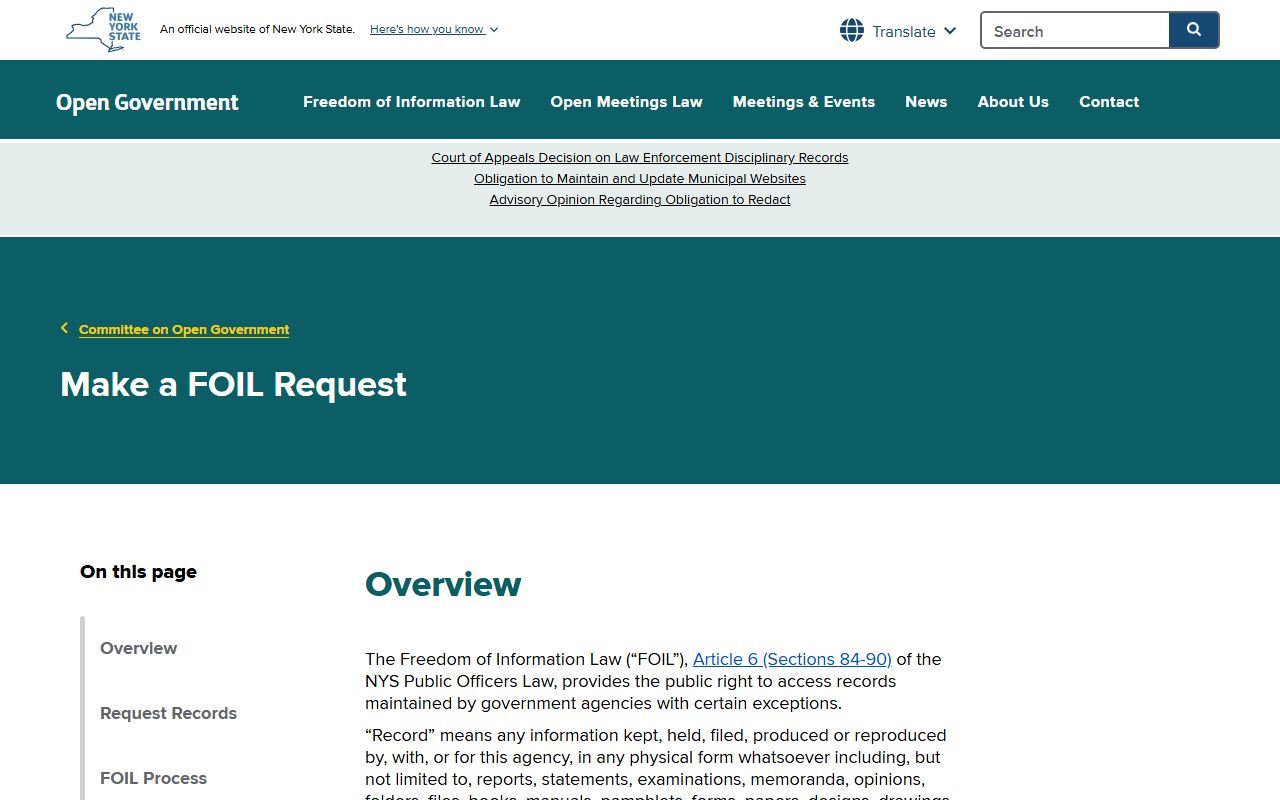
The Freedom of Information Law gives you the right to request police records. FOIL applies to all government agencies in New York, including every police department and sheriff's office. Under Public Officers Law Article 6, Sections 84 through 90, the public can access government records unless a specific exemption applies. To start a FOIL request, you send a written request to the records access officer at the agency. Most agencies accept requests by mail, email, or through an online portal. The agency has five business days to respond, though they can take longer for large or complex requests. Visit the NYS Committee on Open Government for guidance on making a proper request.
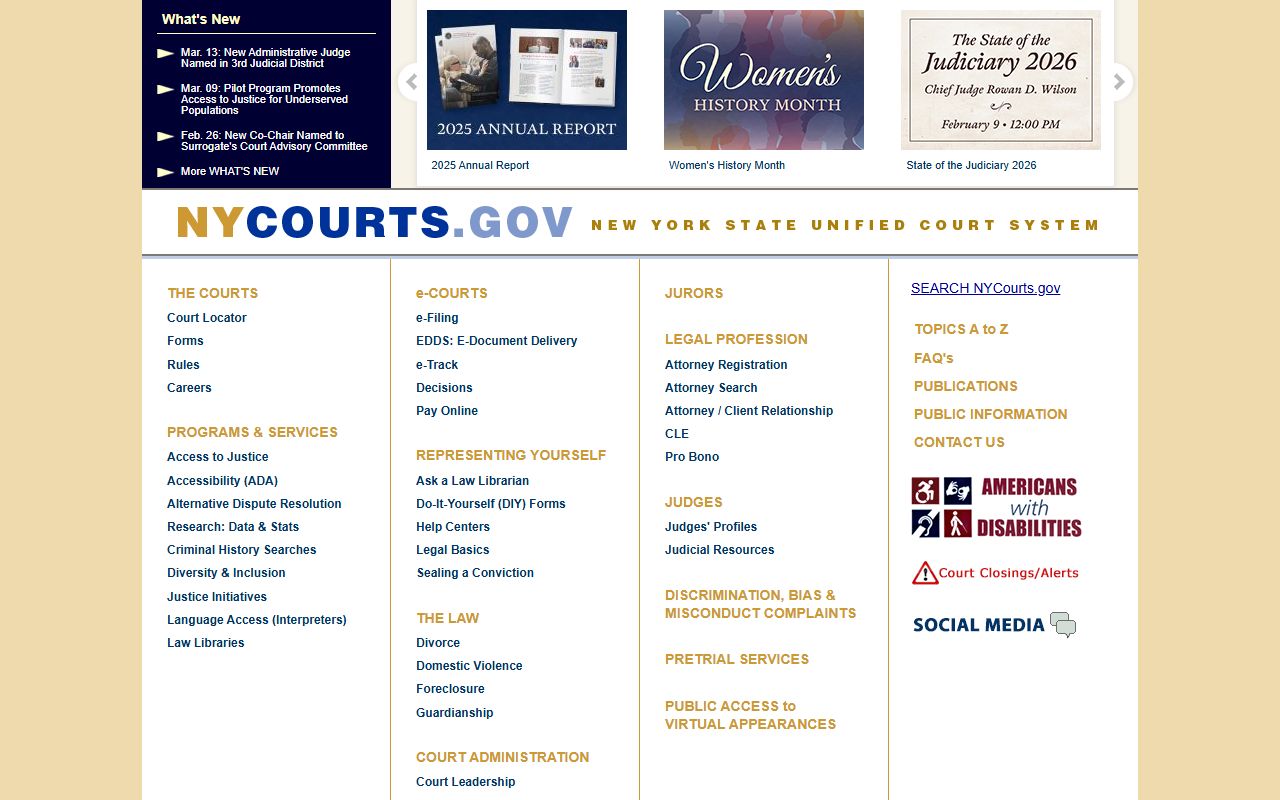
Online tools make some searches faster. The NYS Unified Court System has a case search tool called WebCriminal that covers criminal cases across New York City. For the rest of the state, the eCourts system has case lookup features. These court databases show charges, case status, and disposition information. They are not the same as the police blotter itself, but they can help you find details about an arrest that you already know about.
New York FOIL Law and Police Records
FOIL is how you get police records in New York. It stands for Freedom of Information Law, and it is found in Public Officers Law Article 6. The law says that all government records are presumed open to the public. The burden is on the agency to prove why a record should stay hidden. This matters for police blotter requests because agencies sometimes push back on releasing certain details.
Under Public Officers Law §87, law enforcement records can be withheld if releasing them would interfere with an ongoing investigation, deprive someone of a fair trial, identify a confidential source, reveal non-routine investigative techniques, or endanger someone's life. These exemptions are narrower than most people think. A basic arrest log or booking record usually does not fall under any of them. The police blotter itself, which shows the name of the person arrested, the charge, and the date, is almost always public.
If an agency denies your request, you can appeal. The first step is an administrative appeal to the head of the agency. If that fails, you can go to the Committee on Open Government for an advisory opinion. They review FOIL disputes and issue opinions on whether the denial was proper. Their opinions are not binding, but courts give them weight. You can also challenge a denial in court under Article 78 of the Civil Practice Law and Rules. The NYCLU FOIL Toolkit has sample request letters and appeal templates that can help if you hit a wall.
Response times matter. Public Officers Law §89(3) requires agencies to respond within five business days. That response can be the records themselves, an acknowledgment that the request was received with an estimated time frame, or a denial with reasons. Agencies that drag their feet on police blotter requests are violating the law. If you do not hear back in five days, you can treat the silence as a denial and start the appeal process right away.
Types of Police Blotter Records in New York
Police blotter is a broad term. It covers several types of law enforcement records. Each type has a different purpose and contains different information. Knowing which one you need saves time when you make your request.
Arrest logs are the core of most police blotter data. They record every arrest made by a department. The log typically shows the name of the person arrested, their age, the charges filed, and the date and time of the arrest. In New York, arrest information is generally public under FOIL. Some departments post weekly or monthly arrest summaries on their websites. Others only release this data upon request.
Incident reports are more detailed. When police respond to a call, the officer writes up an incident report describing what happened. These reports include the location, the nature of the call, names of people involved, witness statements, and the officer's observations. Incident reports for open investigations may be partially redacted or withheld until the case is closed. Once the investigation ends, most of the report becomes available through FOIL.
Accident reports fall under a different rule in New York. Vehicle and Traffic Law §603-a governs access to motor vehicle accident reports. You can get a copy of an accident report from the police department that responded to the crash. The Department of Motor Vehicles also keeps copies. These reports show the drivers involved, insurance information, a diagram of the crash, and the officer's determination of fault.
Booking records are created when someone is processed at a jail or holding facility. They include fingerprints, photographs, personal information, and the charges. County jails in New York maintain these records. The NYS Department of Corrections and Community Supervision handles records for people sent to state prison after sentencing.
Police Blotter Fees and Access in New York
Getting police blotter records in New York costs very little. Under FOIL, agencies can charge $0.25 per page for copies. That is the standard rate set by law. They cannot charge for the time it takes to search for or retrieve the records. If you ask for electronic copies, many agencies will send them by email at no charge. Paper copies are where the per-page fee applies.
Some records have set fees. Accident reports often cost between $10 and $25 depending on the agency. Certified copies of police reports cost more than plain copies. The fee for a certified copy varies by department. In New York City, the NYPD charges $10 for most records requests. County sheriff offices each set their own fees within the limits of the law.
In-person requests at a police department or sheriff's office are usually the fastest way to get records. Walk in during business hours and ask to speak with the records clerk. Bring a photo ID. If you know the incident number or case number, the process goes quicker. Many offices can pull up records and make copies while you wait. Mail requests take longer, usually one to three weeks depending on the agency's workload.
Online Databases and Police Blotter Resources
New York has several online tools for finding police and crime records. None of them hold every police blotter record from every agency, but together they cover a lot of ground. Here is what is available at the state level.
The NYS Unified Court System runs the WebCriminal and eCourts databases. WebCriminal covers New York City criminal court cases. The eCourts system handles cases from the rest of the state. You can search by name or case number to find charges, court dates, and case outcomes. These are court records rather than raw police blotter data, but they show you what happened after an arrest was made. The information is free to access.
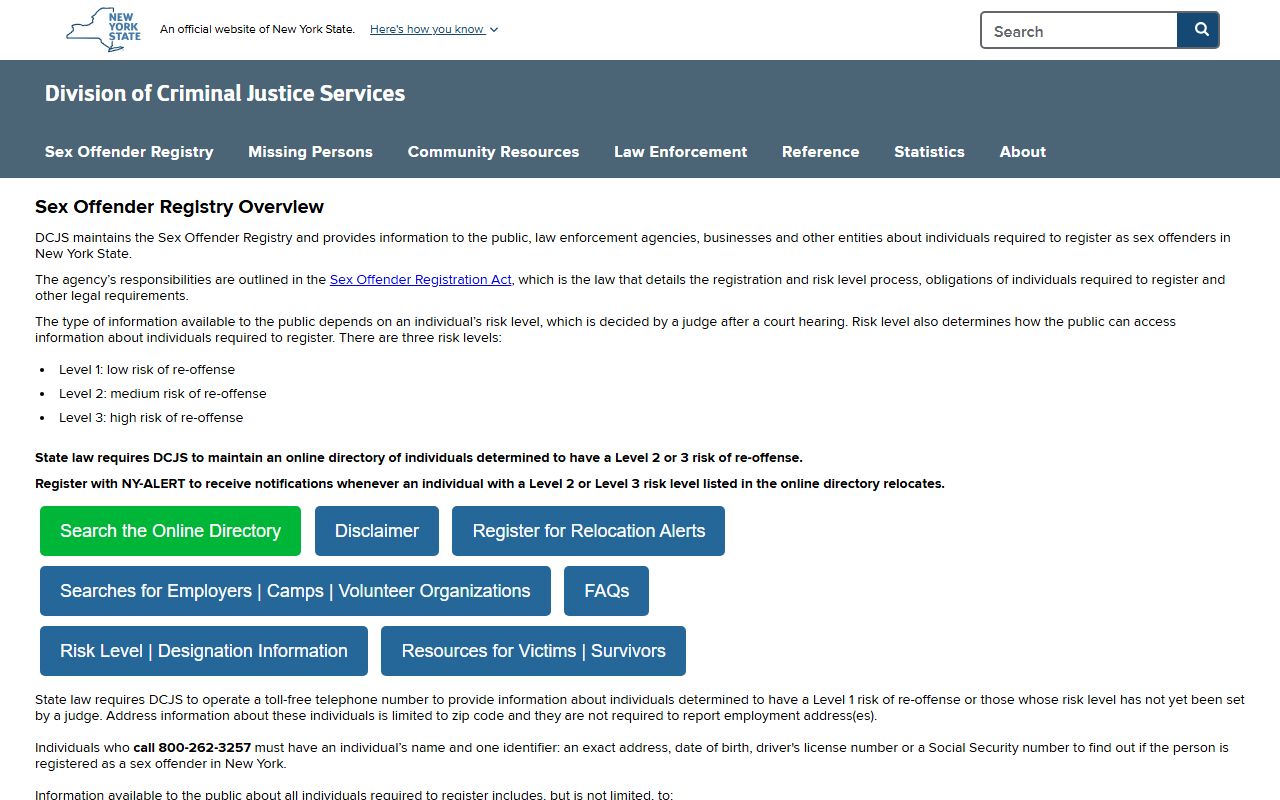
The NYS Sex Offender Registry is run by the Division of Criminal Justice Services. It lists registered sex offenders by name, county, and zip code. This database is separate from the general police blotter, but it can be useful when researching specific types of criminal history in New York. The registry is free and open to the public.
The NYS Archives holds historical law enforcement records. If you are looking for police blotter entries from decades ago, the state archives may be the only source. Local agencies often transfer old records to the archives after a retention period. Current records stay with the originating agency, but anything more than 20 or 30 years old might have been moved.
Many local agencies run their own online portals. The NYPD has an online system for requesting reports. The Erie County Sheriff posts recent bookings on its website. Monroe County and Onondaga County also have online inmate lookup tools that show current jail populations and recent arrests. Check the website for the specific agency you need. The availability of online police blotter data varies widely from one jurisdiction to the next in New York.
Browse New York Police Blotter by County
Each of New York's 62 counties has a sheriff's office that maintains arrest logs and police blotter records. Pick a county below to find local contact info and resources for police records in that area.
Police Blotter in Major New York Cities
Residents of major New York cities can get police blotter records from their local police department. Pick a city below to find out where to go for arrest logs and incident reports in that area.